

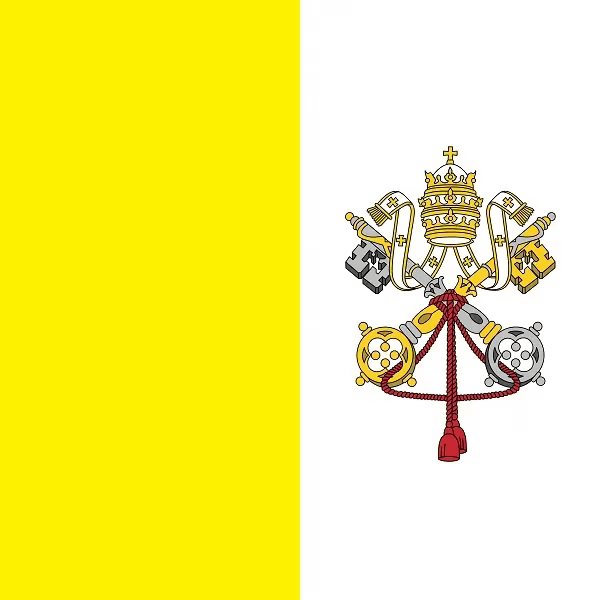
Country Language:
Latin is the official language of the Holy See, particularly for liturgy and official Church documents. Italian is the everyday working language used in administration and governance.
Country Currency:
Euro (EUR) – Although not a member of the European Union, Vatican City uses the euro as its official currency under a monetary agreement with the EU. Vatican coins are minted with unique Vatican designs.
Location
Country Labor Law References & Information
| Statute of the Labour Office of the Apostolic See (ULSA) | Establishes the framework for labour relations within the Holy See, including dispute resolution mechanisms and the role of the Labour Office. | Statute of the Labour Office of the Apostolic See | vatican.va |
| Fundamental Law of Vatican City State (2023) | Serves as the constitution of Vatican City, outlining the legal framework, including aspects related to employment and administrative organization. | Fundamental Law of Vatican City State | Wikipedia |
| Acta Apostolicae Sedis (AAS) | The official gazette of the Holy See, publishing laws, decrees, and official documents, including those related to labour and employment. | Acta Apostolicae Sedis | Wikipedia |
🏛️ Relevant Authorities for Employment
| Institution Name | Description | Official Website |
|---|---|---|
| Labour Office of the Apostolic See (ULSA) | Responsible for managing labour relations within the Holy See, including overseeing employment conditions and resolving disputes. | Wikipedia |
| Human Resources Department Secretariat for the Economy | Handles the lifecycle of employees, from recruitment to retirement, ensuring alignment with the mission of the Church and promoting staff welfare. | spe.va |
| Association of Vatican Lay Workers (ADLV) | The sole trade union in Vatican City, representing lay employees and advocating for their rights and working conditions. | Wikipedia |
Labour Legislation in Vatican City
Vatican City’s labour legislation is unique, reflecting its status as the spiritual and administrative center of the Roman Catholic Church. The legal framework is deeply rooted in canon law and the Church’s social doctrine, emphasizing the dignity of work and the moral responsibilities of both employers and employees.
Employment within the Vatican is governed by a combination of ecclesiastical laws and specific statutes, such as the Statute of the Labour Office of the Apostolic See (ULSA). This statute outlines the procedures for managing labour relations, including mechanisms for dispute resolution through conciliation and arbitration.
The Fundamental Law of Vatican City State serves as the constitution, providing the overarching legal structure, including aspects related to employment and administrative organization.
The Human Resources Department under the Secretariat for the Economy oversees the entire lifecycle of Vatican employees, from recruitment to retirement. This department ensures that personnel policies align with the Church’s mission and values, focusing on staff welfare and professional development.
This page is intended as a general reference guide to the most commonly used job boards and key employment-related resources in the country, including links to local labor laws where available. While HR DADA strives to keep this information current, we update these listings periodically to reflect changes in market trends, platform relevance, and regulatory updates. For the most accurate and tailored guidance, whether for compliance, recruitment strategy, or HR market entry, we recommend reaching out directly to the HR DADA team via chat space.crew@hrdada.com.


