

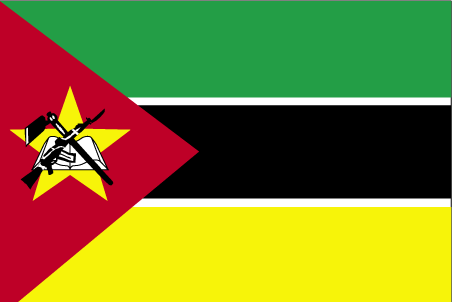
Country Language
Portuguese
Country Currency
(MZN) Mozambique Metical
Location
Country Labor Law References & Information
Recruitment in Mozambique starts before the advert goes live. An employer must notify the public employment service at least seven days before publishing a job vacancy or pre-professional internship. This Mozambique employment guide follows the decisions that come next, from choosing the contract and checking the sector minimum wage to registering the employee and running the first payroll.
1. Country Labour Law in Mozambique
Key Legislation and Official Sources
| Legislation | Description | Official Source |
|---|---|---|
| Constitution of the Republic of Mozambique | Provides the constitutional basis for equality, the right to work, trade union rights and collective action. | Presidency, Constitution of Mozambique |
| Labour Law, Law No. 13/2023 of 25 August | The principal statute for private employment took effect on 21 February 2024 and repealed Law No. 23/2007. It governs contracts, working time, pay, leave, discipline, termination, collective relations and workplace safety. Transitional rules matter for events or procedures that began under the earlier law. | National Social Security Institute legislation collection · ILO employment protection database, including English text |
| Decree No. 45/2023 of 3 August | Requires employers to communicate job and pre-professional internship vacancies to the public employment service before publication. The employer retains responsibility for selecting the candidate. | Official Gazette, vacancy notification regulation |
| Decree No. 88/2024 of 17 December | Regulates foreign employment. It distinguishes quota-based hiring, individual work authorisation, approved investment projects and short-term assignments. The employer must identify the applicable route. | Official Gazette, foreign hiring regulation |
| Sector minimum wage instruments | Minimum pay depends on economic activity. Some sectors have separate classifications by branch or employer size. The official table identifies the effective date and category. | INSS minimum wages in force |
| Social Protection Law, Law No. 4/2007 of 7 February, and Decree No. 51/2017 of 9 October, as amended | Establish the framework for compulsory social security, contributions and benefits. Decree No. 56/2024 amended the implementing regulation, including provisions relevant to family benefits. | INSS laws and implementing decrees · INSS family benefits |
| Decree No. 62/2013 of 4 December | Regulates workplace accidents and occupational diseases. Read it with the Labour Law’s duties on prevention, assistance and compulsory occupational-risk insurance. | Official Gazette, occupational injuries regulation · Labour Law collection |
| Personal Income Tax Code (IRPS), as amended by Law No. 11/2025 of 29 December | The code governs personal income tax, including employment income. Employers need the current withholding rules when setting up local payroll. | Mozambique Tax Authority, fiscal legislation · Official Gazette, 2025 amendment |
| Official legislative repository and ILO resources | The Boletim da República is the official publication for laws and regulations. The ILO country profile provides access to international labour standards, ratifications and national labour law resources. | Official Gazette collection · ILO Mozambique country profile |
Domestic service has its own regulatory framework. The government published a new domestic work regulation, Decree No. 52/2026, with a deferred commencement. Households planning a hire during the transition should check the commencement provision before using the new terms.
Institutions an Employer May Need
| Institution | Responsibility | Official website |
|---|---|---|
| Ministry of Labour, Gender and Social Action and General Labour Inspectorate (IGT) | The Ministry oversees labour administration. The Inspectorate monitors compliance with employment and workplace safety requirements. Provincial labour authorities handle filings such as foreign-worker notifications. | Ministry and labour inspection information |
| National Employment Institute (INEP) | Operates the public employment service, connects candidates and employers, and receives statutory vacancy notifications. | Government guide to INEP employment services |
| Labour Mediation and Arbitration Commission (COMAL) | Provides labour mediation and arbitration services. Employers and workers can use its guidance to identify the appropriate dispute-resolution channel. | Ministry’s COMAL page |
| National Social Security Institute (INSS) | Registers employers and workers, collects contributions and administers benefits, including pensions and qualifying sickness and parental benefits. | INSS employer services |
| Mozambique Tax Authority (AT) | Administers taxpayer registration and employment-income withholding. Its fiscal legislation and declaration services are the reference for payroll tax. | AT fiscal legislation · IRPS payment form |
| Balcão de Atendimento Único (BAU) | The business one-stop service provides access to registration and economic activity licensing services. The relevant licence depends on what the business will do. | BAU business services |
2. Labour Legislation in Mozambique
Contracts and Probation
Employment contracts generally require a dated document signed by both parties. It should identify the parties, duties, workplace, contract duration, pay and start date. Article 39 makes a narrow exception for certain fixed-term tasks lasting no more than 90 days. If an employer omits a required written contract, the worker retains the rights acquired through the employment relationship.
A fixed term normally needs a genuine temporary reason, such as seasonal work or covering an absence. The contract must explain the facts connecting that reason to the end date. A special rule allows micro, small and medium employers to enter fixed-term contracts freely during their first eight years of activity. Before relying on it, HR should verify the employer’s statutory size category and operating history. If the parties want probation, they must specify it in writing. Otherwise, the law presumes they excluded it. Maximum probation periods vary with the role and contract.
Working Hours, Minimum Wage and Rest
The Labour Law regulates ordinary hours, breaks, weekly rest, shifts, overtime and public-holiday work. Article 95 requires the employer to consult the competent union body on the timetable, obtain endorsement from the labour administration and display the schedule visibly at the workplace. The employer must record overtime. Payroll should distinguish extra hours on an ordinary working day from work on a rest day or public holiday, since different pay and rest rules can apply.
Mozambique sets minimum wages by sector. The official INSS table in force from 1 April 2026 lists separate entries, for example, for general manufacturing, bakeries and cashew processing. Mining and utilities also have subdivisions. When preparing an offer, payroll should record the economic activity, applicable category and effective date. A job title alone rarely answers all three questions.
Annual Leave, Sickness and Family Leave
Paid annual leave generally increases after the first year of effective service. The law counts leave in calendar days, excludes public holidays that fall during leave and gives certain shorter fixed-term employees a monthly accrual rule. If an employee becomes ill during leave, certified illness can be excluded from annual leave when the employee informs the employer within the statutory period. A sickness absence and entitlement to an INSS cash benefit are separate decisions. INSS assesses contribution history and medical evidence.
The Labour Law grants 90 consecutive days of maternity leave and normally seven days of paternity leave, starting the day after birth. Paternity leave requires written notice and is subject to a statutory interval between claims. A longer entitlement applies when the mother dies or is medically incapacitated. INSS publishes the separate contribution conditions for cash benefits. HR should confirm the employee’s leave dates and benefits eligibility separately, particularly for a recent hire.
Safety, Healthcare and Pensions
The employer must organise safe work, explain occupational risks and maintain group insurance covering workplace accidents and occupational diseases. If an accident occurs, the employer must arrange first aid and transport to a medical facility as required. An onboarding record should identify the insurer, the person responsible for reporting incidents and the arrangements for treatment at each worksite.
Compulsory social security is funded through employer and employee contributions. The scheme provides benefits including old-age, invalidity and survivors’ pensions, as well as specified sickness and hospitalisation benefits. When an offer also promises private medical cover, the offer should name the plan, covered dependants and any employee contribution. That lets the employee distinguish an agreed health benefit from an INSS cash payment or an occupational-injury claim.
Equal Treatment, Employee Representation and Dismissal
The Labour Law protects equal treatment and union rights. Employers should use consistent criteria for pay, promotion and discipline, and give employees a way to report harassment. A collective agreement may govern terms or procedures for the workforce. HR should establish which agreement applies and identify the union body to consult on matters such as work schedules and leave planning.
Misconduct and redundancy follow different procedures. In a disciplinary case, the employer must identify the allegation, follow the statutory process and allow the employee to respond before deciding on dismissal. For termination on structural, technological or market grounds, it must substantiate the business reason and check consultation, notification, notice and compensation requirements. A team restructuring should start with the reason and the affected positions, before any individual dismissal letter is issued.
3. The Most Popular Job Boards in Mozambique
These channels serve different recruitment needs. Publicly verifiable audience figures were unavailable, so the table groups platforms by their use to employers and candidates. A private employer advertising a vacancy should complete the INEP notification before the advert appears on a commercial board.
| Platform | Link | Description |
|---|---|---|
| INEP Public Employment Portal | Government employment portal directory | The national public employment service connects registered candidates with vacancies across Mozambique. The government directory links to the INEP portal. Employers can also use the notification channels provided in the vacancy regulation. |
| emprego.co.mz | emprego.co.mz vacancies | A Mozambique recruitment platform for employers advertising a specific position. Candidates can review the duties, requirements and application instructions. The operator also publishes information for recruiters. |
| MMO Emprego | MMO vacancies | A local board searchable by role, location, field and type of opportunity. Listings cover Maputo and provincial locations, which makes it useful for site-based and regional hiring. |
| United Nations in Mozambique | UN Mozambique jobs | The UN country team lists opportunities with participating agencies. Candidates can check the agency, duty station and application requirements, including whether an opening is a consultancy or staff position. |
For a provincial vacancy, employers should name the district or worksite and state whether the role involves travel or rotation. A province-wide search can otherwise attract applicants unable to reach the site. Candidates comparing adverts should check the closing date and the hiring organisation’s application instructions, particularly when the same vacancy appears on several platforms.
In October 2026, the National Institute of Information and Communication Technologies reported that the proposed general Personal Data Protection Law was on Parliament’s agenda. Enactment could not be verified by the review date. The Labour Law already restricts the collection and disclosure of private information. For example, an employer holding confidential employee information generally needs express consent before disclosing it to a third party, unless a legal reason requires disclosure.
4. Doing Business in Mozambique
Local Presence, Registration and Communication
Before the first offer goes out, an international business should determine which entity will sign the employment contract, direct the work and operate payroll. The BAU can identify registration and licensing requirements for the proposed activity. For employer registration, INSS lists the business licence or simplified licence, the tax declaration of commencement, the taxpayer identification number (NUIT) and documents identifying the company or its representative. A foreign business considering a branch should confirm the appropriate registration and tax treatment for its intended activities.
Portuguese is the official language. A practical approach is to prepare employment records and filings in Portuguese, agree the working language for negotiations, and offer explanations in a language the employee understands where needed. This matters especially for technical instructions at a worksite. When the local manager and overseas headquarters share decisions, recording who approves the terms and who can sign helps avoid issuing an offer that the employing entity has yet to authorise.
Payroll, Tax and Accounting
Payroll must distinguish personal income tax (Imposto sobre o Rendimento das Pessoas Singulares, or IRPS) from compulsory social security. The employer should identify taxable remuneration under the current IRPS Code, apply the appropriate withholding and remit it through the Tax Authority. Finance should reconcile gross pay, deductions, net pay and remittances to the ledger. The December 2025 IRPS amendment is relevant when checking whether older payroll settings still apply.
For INSS, employers submit a remuneration declaration and pay the contributions. The normal deadline is the tenth day of the following month, moving to the next working day when it falls on a weekend or public holiday. HR and finance should reconcile the employee list, contribution base and payment receipt each month. An employee’s incomplete contribution history can affect a later sickness or parental benefit claim.
Employees and Independent Contractors
Mozambique’s Labour Law gives two reasons to examine a consultancy closely. Article 22 recognises a presumption of employment where a person performs paid work with the employer’s knowledge and without objection, or where the person depends economically on the recipient. Article 23 also converts service contracts into employment contracts when the work corresponds to a vacancy on the company’s staffing establishment. Approval as a supplier or submission of invoices does not resolve either question.
For example, if a company proposes filling a vacant staff accountant position with a consultant, HR should review the staffing plan, the duties and how the person will earn their living before procurement signs the contract. Getting that decision right determines which employment protections, registration and payroll obligations the business must apply.
This page is intended as a general reference guide to the most commonly used job boards and key employment-related resources in the country, including links to local labor laws where available. While HR DADA strives to keep this information current, we update these listings periodically to reflect changes in market trends, platform relevance, and regulatory updates. For the most accurate and tailored guidance, whether for compliance, recruitment strategy, or HR market entry, we recommend reaching out directly to the HR DADA team via chat space.crew@hrdada.com.


