

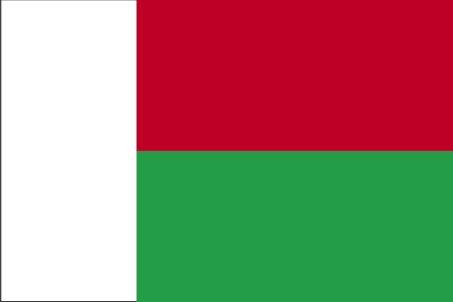
Country Language
French
Malagasy
Country Currency
(MGA) Malagasy Ariary
Location
Country Labor Law References & Information
Madagascar labour law provides the foundation for employing people, organising work and managing workplace responsibilities. For international employers, a reliable hiring plan connects that legal framework with business registration, payroll, social protection and a recruitment strategy suited to the role.
1. Country Labor Law
Key Employment Legislation
Law No. 2024-014 of 14 August 2024 is Madagascar’s Labour Code. It replaces the earlier Labour Code under Law No. 2003-044 of 28 July 2004. Employers reviewing older contracts, policies or online guidance should therefore check their provisions against the newer legislation.
The Code generally covers employment performed in Madagascar, regardless of where the contract was signed or where the parties reside. Its scope excludes independent workers, public agents governed by specific statutory arrangements and workers governed by the Maritime Code. These exclusions require separate analysis when the business model falls outside ordinary private employment.
| Legislation | Description | Official Source |
|---|---|---|
| Labour Code, Law No. 2024-014 of 14 August 2024 | Governs individual and collective employment relationships, contracts, remuneration, working time, leave, employee protection, occupational health, inspection and disputes. Article 394 repeals contrary earlier provisions, including those of the 2004 Labour Code. | CNLEGIS, Government Legislation Database CNaPS, Labour Code Repository |
| Implementing Regulations Preserved by Article 391 of the 2024 Labour Code | Regulations made under earlier labour codes and the former workplace hygiene and safety code continue only insofar as they do not conflict with the 2024 Code, pending replacement. | CNLEGIS, Legislation and Regulatory Texts CNaPS, Code Repository |
| Social Welfare Code and Applicable Social Security Regulations | Provide the framework administered by CNaPS for family benefits, occupational injuries and diseases, and pensions. | CNaPS, Social Welfare Code and Documentation |
| Tax Code, Tax Procedures Code and Applicable Finance Legislation | Govern employment-income taxation, withholding, declarations and related tax administration. The DGI repository lists the codes updated for the initial 2026 Finance Law. | DGI, Codes and Manuals Repository DGI, Regulatory Texts |
Labour Institutions and Employer Support
Different institutions handle business formation, employment supervision and social protection. A company’s commercial registration does not, by itself, complete its labour or social-security obligations. Employers should assign responsibility for each relationship and retain the corresponding registrations and submissions.
| Institution | Responsibilities | Official Website |
|---|---|---|
| Ministry Responsible for Labour and Employment | Leads labour administration and employment policy. Labour inspectors supervise compliance, receive establishment declarations and exercise the powers assigned by the Labour Code. | Ministry of Labour, Employment and Public Service |
| Caisse Nationale de Prévoyance Sociale, CNaPS | Administers private-sector social security, including employer and employee registration, contributions, family benefits, occupational injury protection and retirement benefits. | CNaPS |
| Direction Générale des Impôts, DGI | Administers taxation, including employment-income withholding, employer declarations and tax compliance. | DGI Official Portal |
| Economic Development Board of Madagascar, EDBM | Provides investor services and company-formation guidance. Its services include access to Orinasa and the foreign-worker authorisation process. | EDBM Company Formation |
| Office National de l’Emploi et de la Formation Professionnelle, ONEF | Supports matching between employment offers and jobseekers and orientation towards vocational training. | Ministry Directory of Public Bodies |
2. Labour Legislation in Madagascar
Employment Contracts and Written Terms
The employer must record the engagement in writing at hiring. Article 18 requires at least the role, professional category, minimum classification index, salary and effective date. The document must be prepared in Malagasy and/or French according to the parties’ preference. Both parties sign two copies, and the worker receives a copy immediately.
The absence of a written document does not erase an employment relationship. The Code allows the relationship to be proved through other evidence and treats a proven unwritten employment relationship as indefinite. Employers should therefore complete documentation before work begins and keep signed versions accessible.
Indefinite contracts suit continuing employment. Fixed-term contracts have restricted purposes, including specified work and certain exceptional staffing needs. A temporary label alone does not justify using them for ordinary permanent work. Duration, renewal and conversion rules require checking before each extension.
Probation and any renewal must also be recorded in writing. The permitted duration depends on the professional category and applicable implementing rules. Probation does not remove the worker’s entitlement to the working conditions and social protection attached to the position. These requirements appear in Articles 18–27 and 52–54.
Working Hours, Overtime and Rest
Articles 108–124 regulate working time, rest, holidays and night work. The Code distinguishes the ordinary working-time framework from the agricultural regime. It also provides for sector and occupational rules, equivalence arrangements and authorised exceptions.
Employers must identify the regime that applies to each role, record actual hours and apply the relevant overtime limits and premiums. An internal approval process helps control costs, but it should not obscure the need to account for work actually performed. Collective agreements may provide more favourable limits.
Daily and weekly rest are mandatory. Sunday is the ordinary weekly rest day, subject to lawful arrangements for exceptions. Public holidays and designated bridge days depend on the official annual decree, so payroll calendars should be refreshed each year.
Night work carries additional protections, including relevant health safeguards and employer responsibilities for transport and safety. Businesses operating shifts should assess these obligations before publishing rosters, particularly where employees travel after normal transport services end.
Annual Leave and Family Absences
Paid annual leave accrues through service under Articles 125–133. The Code specifies periods treated as effective service, including certain certified absences and protected family-related leave. Payroll systems should apply those rules rather than stopping accrual automatically whenever an employee is absent.
Leave planning must respect the statutory rules on entitlement, uninterrupted leave and scheduling. Employers should agree dates in advance and maintain a record of accrued, taken and outstanding leave. A worker cannot validly surrender statutory leave, and ordinary cash substitution during continuing employment is prohibited. Outstanding acquired rights require settlement when employment ends.
The Code also recognises exceptional family permissions and certain absences connected with a child’s or spouse’s health. Each category has its own evidence, duration and payment rules. Employers should avoid treating all family absences as annual leave or assuming that every protected absence carries identical pay.
Sickness, Maternity and Paternity
Certified prolonged illness can suspend the employment contract under Article 31. The protected period and the employer’s payment obligation are separate questions. Article 32 links the suspension allowance to a specified limit and the applicable notice period; it does not provide unlimited full salary throughout every illness-related absence. Long-term illness has additional provisions.
Maternity leave under Article 143 is distinct from annual leave. The Code preserves salary during the statutory maternity period, with funding shared between the employer and CNaPS under the legal arrangement. If the employer has not affiliated the employee, the Code places the relevant maternity salary and medical-cost obligations on the employer.
Pregnancy protections also cover recruitment, probation and work that presents a health risk. The Code provides for suitable reassignment where necessary and paid breastfeeding breaks after childbirth. Pregnancy-related protection does not prevent every lawful termination or the expiry of a genuine fixed-term contract.
Article 134 establishes employer-paid paternity leave for an employee who is the legal spouse of the woman giving birth. Employers may offer a more favourable benefit, but policy wording should distinguish that enhancement from the statutory eligibility rule.
Minimum Wage and Salary Administration
Madagascar applies a salaire minimum d’embauche, or SME, with agricultural and non-agricultural frameworks. Article 85 provides for minimum pay by professional category and periodic revision. Classification therefore matters alongside the headline minimum.
Before issuing an offer, employers must check the current official schedule, the role’s category and any applicable collective agreement. A historic wage table is insufficient evidence of present compliance.
Remuneration policies must also respect equal pay for equal work or work of equal value. Performance-related differences should rest on objective criteria. For piecework and target-based work, the Code requires objective production parameters and safeguards comparable remuneration. Payroll teams should review the full package, including benefits, deductions and overtime, instead of checking basic salary alone.
Occupational Health and Safety
Articles 163–170 place workplace health and safety responsibilities on the employer. These include risk assessment, prevention, appropriate protective equipment, information, training and emergency arrangements. The Code specifically requires an updated Document Unique d’Évaluation des Risques, or DUER, and an annual Plan d’Action de Prévention, or PAP.
Employers should turn those documents into practical controls. Relevant measures may include safe machinery, ergonomic workstations, emergency response procedures and controls for psychosocial risks. Required protective equipment and safety training must be provided without charging workers.
Medical affiliation is a separate obligation. Under Articles 179–181, the employer must join an approved occupational medical service and affiliate employees. Employee affiliation must take place within 15 days after starting work. The normal model is an intercompany medical service, with alternatives governed by the applicable rules.
At 50 workers, the Code requires a workplace safety and health committee. Its organisation must follow the applicable implementing framework. Employers should review this trigger as staffing grows rather than waiting for an inspection.
Equality, Harassment and Employee Protection
The Code prohibits employment discrimination and provides protection against violence, sexual harassment and psychological harassment. Article 13 requires appropriate preventive measures, including a workplace policy developed with worker participation and consideration of associated psychosocial risks.
Recruitment criteria, promotion decisions and pay reviews should reflect the role’s requirements and documented evidence. Managers should receive practical guidance on acceptable conduct, complaint handling and the protection of workers who report or resist harassment.
Additional rules protect young workers, pregnant and breastfeeding employees, and worker representatives. Employers recruiting younger people must check the permitted work, age and protective conditions before engagement.
Social Security, Healthcare and Pensions
CNaPS administers the principal private-sector social-security branches for family benefits, occupational injuries and diseases, and retirement. Employers must arrange registration, declare workers and remuneration, and remit contributions under the applicable rules.
The employer should retain evidence linking each worker’s identity and employment record to their social-security registration. Payroll changes, departures and occupational incidents should feed into the appropriate administrative process. This helps avoid gaps between salary payment and the records used to establish benefit rights.
CNaPS affiliation does not replace the separate occupational medical service required by the Labour Code. Optional private health insurance may supplement benefits, but it should not be treated as automatic compliance with that requirement. Employers should confirm the applicable contribution bases, rates and filing calendar directly with the responsible body before configuring payroll.
Termination, Notice and Final Payments
Dismissal requires a legitimate basis and the appropriate procedure. Articles 35–50 distinguish indefinite contracts, fixed-term expiry, early termination and economic dismissal. A fixed-term contract does not generally provide a cost-free route to early termination when business needs change.
The Code protects the employee’s right to defend against a proposed dismissal. Article 42 requires written notice of the disciplinary hearing or preliminary interview at least three working days beforehand. The employer must preserve dismissal documents for at least five years.
Termination must be notified in writing with reasons. Depending on the circumstances, the final settlement includes outstanding salary, compensation for unused leave, notice or payment in lieu, and any other legally due entitlement. The employer must issue a work certificate.
Economic dismissals have additional procedures. Dismissal of protected representatives also requires separate scrutiny. Employers should identify these conditions before deciding dates, communicating a restructuring or calculating exit costs.
Collective Relations and Employment Records
Employees have rights to organise and participate in collective representation. Establishments employing more than 11 employees must hold staff-representative elections. Enterprises habitually employing more than 11 workers must also prepare internal rules through the prescribed process. A works council is required from 50 permanent workers.
Internal rules cover discipline, workplace organisation and health and safety. They must respect consultation and administrative formalities; a policy copied from another jurisdiction is unlikely to address every requirement. Monetary disciplinary penalties are prohibited.
Articles 319–322 require an establishment-opening declaration, an up-to-date employer register and additional records for special worker categories. Employers should maintain inspection-ready records of contracts, hours, pay, leave, training, registrations and personnel changes. The Code allows paper or electronic registers, subject to applicable requirements.
The statutory references throughout this section relate to the 2024 Labour Code available through the official repositories in the legislation table. Detailed implementing rules and applicable collective agreements must be read alongside it.
3. The Most Popular Job Boards in Madagascar
Madagascar recruitment can combine local vacancy platforms, professional networks and specialised institutional channels. The selection below identifies verified services and their purposes.
Recruitment Platforms and Public Channels
| Platform | Link | Description |
|---|---|---|
| Asako | Asako Madagascar Vacancies | A Madagascar-focused job platform with searches by location, occupation, sector and contract type. |
| Madajob | Madajob Recruitment Platform | A local recruitment and HR-services platform with a candidate area and vacancy listings. Its services also include training and outsourcing. |
| PortalJob Madagascar | PortalJob | A local employment, recruitment and training website. It provides another channel for reaching candidates interested in Madagascar-based roles. |
| ONEF, Public Employment Services | Official Ministry Directory | The public employment and vocational-training body supports matching between employers and jobseekers and training orientation. |
| United Nations Madagascar | UN Madagascar Careers | The official country-system careers page provides access to UN recruitment information and career resources. |
Recruitment Landscape and Practical Approach
Local platforms provide a useful view of the roles being advertised, but their vacancies do not measure the whole labour market. Employers should avoid inferring national salary levels, talent shortages or unemployment patterns from one website.
A clear vacancy should state the location, working arrangement, responsibilities, required skills and intended contract type. Language requirements should match the work. Where relocation or foreign-worker authorisation may be necessary, recruiters should explain the conditions before advancing the candidate.
For specialist hiring, a local platform can be paired with professional outreach. For operational roles, employers may also explore public employment and training channels. Selection should remain consistent across sources, using the same job-related criteria and documented assessments.
The strongest recruitment process connects the advertisement to the eventual contract. A role described as temporary, remote or independent during recruitment should receive a legal review if the practical working arrangement points to ordinary employment.
4. Doing Business in Madagascar
Business Communication and Working Relationships
International employers should establish how decisions, approvals and employee questions will move between local teams and overseas management. Clear responsibilities and a reliable local contact help prevent routine payroll or staffing matters from stalling across offices.
For employment documentation, Malagasy and/or French are the languages expressly recognised by the Labour Code. Employers should use language employees understand and provide explanations where technical terms could cause confusion. An English-only headquarters template should be reviewed before local use.
Negotiations should conclude with written confirmation of the agreed terms, decision-makers and next steps. Employers should adapt meeting formats and communication to the specific counterpart and workplace.
Business Registration and Local Presence
EDBM provides guidance on company formation and access to the Orinasa process. Its services cover several legal forms and include relevant formation documents. The appropriate structure depends on the proposed activities, ownership and operating model.
Before employing staff, the business should establish which entity will sign contracts, maintain local records and meet tax and social obligations. It should complete the relevant formation and registration steps and check any activity-specific approvals.
Registration, operational licensing and labour declarations are distinct requirements. A formation certificate should not be treated as evidence that the establishment-opening declaration, employee affiliations or foreign-worker permissions are complete. Foreign businesses considering direct employment without a local entity should obtain advice on the specific arrangement.
Foreign Employees and Immigration
Article 61 requires prior endorsement of an immigrant worker’s employment contract and a work permit from the competent labour authority. EDBM provides the official entry point to the E-Work application process and supporting document requirements.
The employer should prepare a consistent dossier covering the worker, position and employing entity. Work authorisation and immigration status require coordinated handling; approval under one process should not be assumed to complete the other.
Recruitment timelines should allow for document preparation and official processing. Employers should verify the approved role, work location and validity before the employee starts and keep renewal dates under review. A pending application should not be treated as an issued permission.
Payroll, Taxation and Accounting
Employment-income tax is administered through the Impôt sur les Revenus Salariaux et Assimilés, or IRSA. Employers must apply the relevant withholding and declaration framework and use current DGI rules when calculating taxable remuneration.
A practical payroll process should reconcile contractual pay, benefits, overtime, absences, deductions and social contributions before payment. It should also produce the required payment records and maintain evidence of declarations and remittances. Corporate accounting and tax obligations depend on the entity’s regime and activities.
Payroll teams should maintain a separate controlled register of current rates, ceilings and filing dates. The DGI’s codes and regulatory repository should take precedence over older explanatory articles where the rules differ. Outsourcing payroll administration should include clear responsibilities for approval, correction and access to supporting records.
Employees and Independent Contractors
Article 2 defines an employee by remunerated professional activity carried out under another person’s direction and authority. The Code also expressly includes certain task-based and piece-rate workers. The contract’s title is therefore only one part of the assessment.
A business should examine how the work actually operates: who directs it, how the individual fits into the organisation and whether the arrangement reflects employment under the Code. Regular invoices or a “consultant” label do not, by themselves, establish independence.
Genuine independent arrangements should have a clear scope, deliverables and commercial terms. If the relationship meets the statutory employment criteria, the business must address employee protections and employer obligations. Remote work and outsourcing should receive the same factual review rather than being assumed to fall outside local labour law.
This page is intended as a general reference guide to the most commonly used job boards and key employment-related resources in the country, including links to local labor laws where available. While HR DADA strives to keep this information current, we update these listings periodically to reflect changes in market trends, platform relevance, and regulatory updates. For the most accurate and tailored guidance, whether for compliance, recruitment strategy, or HR market entry, we recommend reaching out directly to the HR DADA team via chat space.crew@hrdada.com.


