

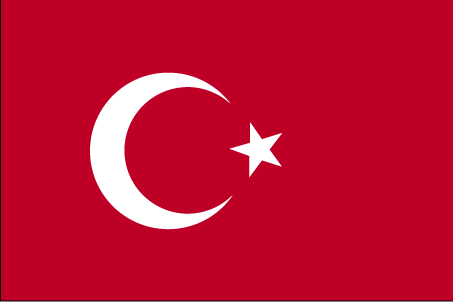
Country Language:
Turkish
Country Currency
(TRY) Turkish Lira
Location
Country Labor Law References & Information
| Law / Regulation | Link | Description |
|---|---|---|
| Labour Law No. 4857 (2003) | 🔗 ILO NATLEX – English Translation 🔗 Official Turkish PDF (İSMMMO) | Primary law governing private sector employment. Covers contracts, working hours, termination, leave, severance, equality, and more. Widely applicable to most employers and employees in Turkey. |
| Occupational Health and Safety Law No. 6331 | 🔗 ILO Summary – Law No. 6331 | Regulates employer obligations in ensuring a safe work environment. Applies to all workplaces regardless of sector. |
| Social Insurance and General Health Insurance Law No. 5510 | 🔗 Social Security Institution (SGK) – Turkish | Governs contributions and benefits related to pensions, health, maternity, accidents, and disability. Mandatory for formal workers. |
| Turkish Code of Obligations (selected sections) | 🔗 Grand National Assembly – Legislation (Turkish) | Provides supplementary rules for civil and commercial contracts, including freelance and atypical employment relationships. |
| Anti-Discrimination Provisions (Article 5 of Law 4857) | 🔗 Refworld – Labour Law 4857 Summary | Explicitly prohibits discrimination based on gender, race, language, religion, or political opinion in employment decisions. |
🏛️ Official Government Sources
| Institution | Link | Role |
|---|---|---|
| Ministry of Labour and Social Security (Çalışma ve Sosyal Güvenlik Bakanlığı) | 🔗 https://www.csgb.gov.tr | The main regulatory body overseeing employment, labour inspections, occupational safety, and employment policy. Publishes regulations and oversees labour law enforcement. |
| Social Security Institution (SGK – Sosyal Güvenlik Kurumu) | 🔗 https://www.sgk.gov.tr | Administers Turkey’s social insurance system, including pensions, health insurance, maternity, disability, and workplace accidents. Handles employer and employee contributions. |
| Turkish Employment Agency (İŞKUR – Türkiye İş Kurumu) | 🔗 https://www.iskur.gov.tr | Provides job-matching services, unemployment benefits, workforce training, and public employment programs. Also collects employment data. |
| Presidency of the Republic of Turkey – Legislation Database (Mevzuat Bilgi Sistemi) | 🔗 https://www.mevzuat.gov.tr | Centralized database of all Turkish laws, including Labour Law No. 4857, Occupational Health Law No. 6331, and related ministerial decrees. |
| Council of State and Labour Courts (Danıştay ve İş Mahkemeleri) | 🔗 https://www.yargitay.gov.tr (Supreme Court site) | Labour courts handle disputes related to dismissal, wages, compensation, and other employment matters. |
| Vocational Qualifications Authority (MYK – Mesleki Yeterlilik Kurumu) | 🔗 https://www.myk.gov.tr | Oversees national occupational standards, qualification certification, and compliance with regulated professions. |
Labour Law in Turkey
Turkey’s labour system is primarily governed by Labour Law No. 4857 (2003), which applies to private-sector employees and regulates contracts, working hours, leave, termination, severance pay, and workplace protections. The law is enforced by the Ministry of Labour and Social Security, with support from specialized labour courts and administrative bodies.
The law includes strong provisions on equality and non-discrimination, and employers are obligated to maintain occupational health and safety under a separate, comprehensive law (Law No. 6331).
Social security, including pensions, health, maternity, and disability benefits, is administered by the Social Security Institution (SGK) and is mandatory for all formal employees.
While the legal framework is well-established and broadly aligned with international standards, enforcement varies between sectors and regions. Informal employment remains prevalent in certain industries, particularly agriculture, domestic work, and seasonal labour.
The Most Popular Job Boards in Turkey
| Job Board | Link | Description |
|---|---|---|
| Kariyer.net | kariyer.net | Turkey’s largest job portal, offering a vast database of job listings across various industries and career levels. |
| Eleman.net | eleman.net | Focuses on blue-collar and entry-level positions, widely used for operational and service sector roles. |
| İŞKUR (Turkish Employment Agency) | iskur.gov.tr | Official government employment portal providing job listings, vocational training, and employment services. |
| Yenibiris.com | yenibiris.com | A long-standing job portal offering listings across industries like education, healthcare, finance, and administration. |
| Indeed Turkey | tr.indeed.com | Global job search engine aggregating listings from various sources, popular among both local and expatriate job seekers. |
| linkedin.com/jobs | Professional networking platform widely used for executive and professional roles across various industries in Turkey. | |
| Secretcv.com | secretcv.com | Targets white-collar and mid-level positions, offering internships and entry-level jobs with built-in CV tools. |
| GrabJobs Turkey | grabjobs.co/turkey | Automated recruitment platform featuring service, logistics, and admin job listings with mobile-friendly application tools. |
| Jooble Turkey | jooble.org | International job search engine aggregating listings from various websites, providing a broad spectrum of job opportunities in Turkey. |
| İsinolsun.com | isinolsun.com | Mobile-focused job board offering quick access to job listings, particularly in retail, hospitality, and services sectors. |
Kariyer.net is the dominant job platform in Turkey, widely used by employers and candidates across all major sectors. It serves as the central hub for white-collar job seekers, offering comprehensive search filters, employer branding, and application tracking features.
Eleman.net and İsinolsun.com focus on blue-collar and entry-level jobs, especially in logistics, hospitality, retail, and customer service. These platforms are popular among operational roles and small to mid-sized businesses.
Yenibiris.com and Secretcv.com maintain steady traffic for mid-level professionals, interns, and fresh graduates. They are valued for their CV databases and regular job updates across administrative, finance, and healthcare fields.
İŞKUR, the official Turkish Employment Agency, plays a critical public role in workforce development, especially for unemployment support, vocational training, and access to both public and private sector vacancies.
LinkedIn is gaining traction in Turkey for executive-level roles, multinational hiring, and professional networking, especially in urban centers like Istanbul and Ankara.
Indeed, Jooble, and GrabJobs act as job aggregators, providing visibility across a wide range of industries. They are often used by foreign applicants and multinational recruiters looking to tap into Turkey’s diverse talent pool.
Turkey’s job board ecosystem is mature and segmented by industry and job level. Most job seekers combine Kariyer.net, İŞKUR, and a second-tier platform based on their specific sector or skill profile.
This page is intended as a general reference guide to the most commonly used job boards and key employment-related resources in the country, including links to local labor laws where available. While HR DADA strives to keep this information current, we update these listings periodically to reflect changes in market trends, platform relevance, and regulatory updates. For the most accurate and tailored guidance, whether for compliance, recruitment strategy, or HR market entry, we recommend reaching out directly to the HR DADA team via chat space.crew@hrdada.com.


