

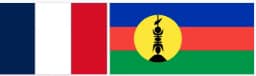
Country Language:
French
Country Currency
(XPF) CFP Franc
Location
Country Labor Law References & Information
| Law Title | Description | Official Source |
|---|---|---|
| Code du travail de Nouvelle‑Calédonie (Législative + Réglementaire) | Core labour code covering contracts, working time, health & safety, local employment protection, leave, dismissal, collective bargaining, and posting. Regularly updated by DTEFP. | DTEFP – Code du travail numérique |
| Conventions et accords collectifs de travail (CCAG) | Sectoral or intercompany collective agreements; may be extended by government decree following Advisory Commission recommendation. | DTEFP – CCAG section |
| Délibérations DTEFP (ex: télétravail, santé) | Regulations on topics such as telework, occupational safety, training, reclassification, workfare, and local employment priorities. | Natlex PDFs – Partie règlementaire |
| Loi du pays n°2017-7 (Livre V Code du travail local) | Organic-law-level codification building on Nouméa Accord; sets structure for labour, social security, and union representation. | Centre-Inffo PDF – Loi du pays |
| Service-public.nc, Employment Overview | Government portal summarizing private employment rules: contract types, wages, leave entitlements, dismissals, and employer obligations. | Service-public.nc – Embauche & Congés |
🏛️ Institutions Responsible for Labour Regulation
| Institution | Role | Official Site |
|---|---|---|
| Direction du Travail, de l’Emploi et de la Formation Professionnelle (DTEFP) | Develops and maintains labour law; supervises working conditions, OSH, collective agreements, telework, local employment support, and labour inspections at both workplace and enterprise levels. | Service-public.nc Employment |
| Commission Consultative du Travail | Advisory body on extending collective agreements and labour-related policy; composed of equal employer and employee representation. | |
| Congrès de la Nouvelle-Calédonie | Legislative body empowered to enact labour, social security, health, and taxation regulations specific to the collectivity under Organic Act. | Congrès powers |
| Syndicats représentatifs (ex: USTKE, COGETRA) | Labour unions with legally defined representational status; involved in collective bargaining and social dialogue. |
📝 Labour Law in New Caledonia
New Caledonia’s labour system reflects a deeply localized and legally robust framework that integrates French labour principles while adapting to the unique context of a Pacific collectivity. At its core is the digital Code du travail, administered by the DTEFP, which comprehensively addresses individual contracts, workplace standards, occupational health and safety, leave, dismissal, collective agreements, telework, and protections for local hire.
Beyond this legal backbone, the system actively supports collective labour regulation. Employers and unions, through a formally constituted Consultative Commission, can form sectoral agreements which, once approved and extended by decree, become binding across the collectivity. These agreements shape wage floors, working conditions, and social benefits tailored to local industries.
Institutionally, labour oversight is anchored by the DTEFP, which goes beyond policy drafting to encompass inspection services, regulatory rollout, telework guidelines, and programmes for local employment and retraining. This role reflects New Caledonia’s governance autonomy, enshrined in the Nouméa Accord and expressed through Country-level laws, as authorised by the Congrès de la Nouvelle-Calédonie.
The territory also supports a framework of legal union representation, guided by defined thresholds, ensuring balanced social dialogue between employers and workers, particularly important in key sectors such as mining, construction, health, and public administration.
New Caledonia has seen proactive regulatory expansion in areas like telework, occupational health updates, and local-content employment strategies. These reflect both French national trends and locally driven reforms aimed at promoting New Caledonian labour market resilience.
The labour law regime in New Caledonia delivers a structured, rights-based system underpinned by strong institutional oversight and a local‑first employment philosophy. It balances universal worker protections with tailored collective tools and local governance, all housed within a digitally accessible legal code.
The Most Popular Job Boards in New caledonia
| Platform | Link | Description |
|---|---|---|
| Emploi.gouv.nc (Public Sector) | emploi.gouv.nc | Official government portal for public and civil service job postings across all territories. |
| Job.nc | job.nc | Leading private-sector generalist board, covers all industries from hospitality to engineering. |
| LinkedIn – New Caledonia | linkedin.com/jobs | Essential for senior, corporate, and international roles, tracks listings from top regional employers. |
| SPC Careers (Pacific Community) | careers.spc.int | Ideal for regional development, technical, and policy-based roles across the Pacific. |
| UNJobs (New Caledonia archive) | unjobs.org/suv | Aggregates UN, INGOs, and international agency positions based in the territory. |
🌺 Navigating New Caledonia’s Job Market
New Caledonia may be a small territory, but its employment ecosystem is remarkably structured. With French legal underpinnings, regional governance autonomy, and an active blend of public and private sectors, the job market here demands both compliance and strategy. Whether you’re hiring for a government-backed initiative or looking for work in tourism, education, or civil engineering, choosing the right channels, and using them effectively, is critical.
🔹For Employers… Recruiting with Reach and Relevance
Hiring in New Caledonia requires more than just posting a job, it’s about understanding how legislation, digital access, and candidate behaviour intersect.
Start with the Emploi.gouv.nc portal. This is the official government job board for civil service and public project roles. If your position is funded or regulated by public money, listing here isn’t optional, it’s part of your compliance obligations. It also sets expectations with candidates who are used to clear contracts and formal hiring steps.
For broader private sector roles, Job.nc is the market leader. It hosts positions in construction, healthcare, mining, administration, and retail. Its wide use makes it ideal for both high- and mid-volume hiring. The interface is clean, mobile-friendly, and trusted locally, key in a region where smartphone-first access dominates.
Want to attract experienced professionals, regional expats, or senior candidates? LinkedIn is still underutilized here, which makes it a powerful edge. Post bilingual job ads, build your brand with local context, and interact directly with prospects. This is especially effective for finance, IT, HR, and project-based roles funded through international bodies.
Don’t overlook SPC Careers and UNJobs. These portals are essential for development-driven hiring. If your project is tied to environmental science, public health, education reform, or technical capacity-building, these sites draw candidates with Pacific-specific experience and global standards.
Keep your job postings lean and practical. List expected responsibilities clearly, mention if bilingual French-English skills are needed, and always indicate contract type (CDD/CDI, project-based, etc.). Most candidates will view your post on mobile, keep it short and skimmable. And always provide a contact point (email or phone) to avoid losing applicants to form fatigue or poor network coverage.
🔹For Job Seekers…
Looking for a job in New Caledonia means working within a formal but localized system. Government and private employers often follow different rules, but all expect clarity, professionalism, and the ability to communicate in both French and, increasingly, English.
Start by monitoring Emploi.gouv.nc. If you’re aiming for a public sector role, education, civil planning, municipal services, this is your first stop. Make sure your CV is updated, translated if needed, and submitted with full supporting documentation. Expect structured applications and deadlines that are strictly observed.
Next, set up a profile on Job.nc. Most private employers advertise here first. Use relevant keywords, update your file monthly, and check new listings frequently. If you’re in hospitality, construction, logistics, or healthcare, this platform is your core channel.
Build a professional LinkedIn presence, even if you’re only applying locally. Many recruiters in New Caledonia (especially in the international sector) will search for your profile even after receiving your application. Use a clear headline (“Technicien de maintenance | 5 ans d’expérience | Nouméa”), include your certifications, and make your contact details easy to find.
Keep two CV versions: one for local jobs (simple, clear, no headshots) and another for regional or international roles (detailed, with soft skills, mission alignment, and language fluency). Keep your PDF size under 2MB, some recruiters use limited data access or basic inboxes. And remember: even a brief message in French to accompany your application can set you apart.
Structure + Strategy = Success
New Caledonia’s job market blends regulatory order with digital fragmentation. There is no single “best” platform, only the best platform for your purpose. Employers must respect formal posting requirements while embracing tools that reach candidates effectively. Job seekers must balance structure with visibility, especially as digital applications become the norm.
- Government roles → Emploi.gouv.nc
- Local and sector jobs → Job.nc
- International and senior roles → LinkedIn
- Regional development and technical jobs → SPC Careers
Whether you’re recruiting for a sustainable agriculture project or seeking your first job after vocational training, the New Caledonian market rewards those who prepare, personalize, and stay connected.
At HR DADA, we believe that work should transcend borders, and that good employment systems respect both regulation and human potential.
This page is intended as a general reference guide to the most commonly used job boards and key employment-related resources in the country, including links to local labor laws where available. While HR DADA strives to keep this information current, we update these listings periodically to reflect changes in market trends, platform relevance, and regulatory updates. For the most accurate and tailored guidance, whether for compliance, recruitment strategy, or HR market entry, we recommend reaching out directly to the HR DADA team via chat space.crew@hrdada.com.


